Overview
Inland World Logistics was facing growing operational challenges due to fragmented systems and manual processes. Shipment tracking lacked transparency, coordination between teams was inefficient, and recurring errors were impacting both delivery timelines and profitability.
Our objective was to build a centralized Shipping Management System that could streamline operations, reduce manual dependency, and bring real-time visibility across the entire logistics workflow.
The Challenge
The existing system created multiple bottlenecks:
- No unified platform to track shipments end-to-end
- Heavy reliance on manual coordination and data entry
- Limited visibility into shipment status and delays
- Frequent operational errors and miscommunication
- Revenue leakage due to inefficiencies and billing mismatches
These issues collectively resulted in increasing operational costs and preventable business losses.
Our Approach
We focused on creating a solution that not only digitized operations but optimized them for scale and efficiency.
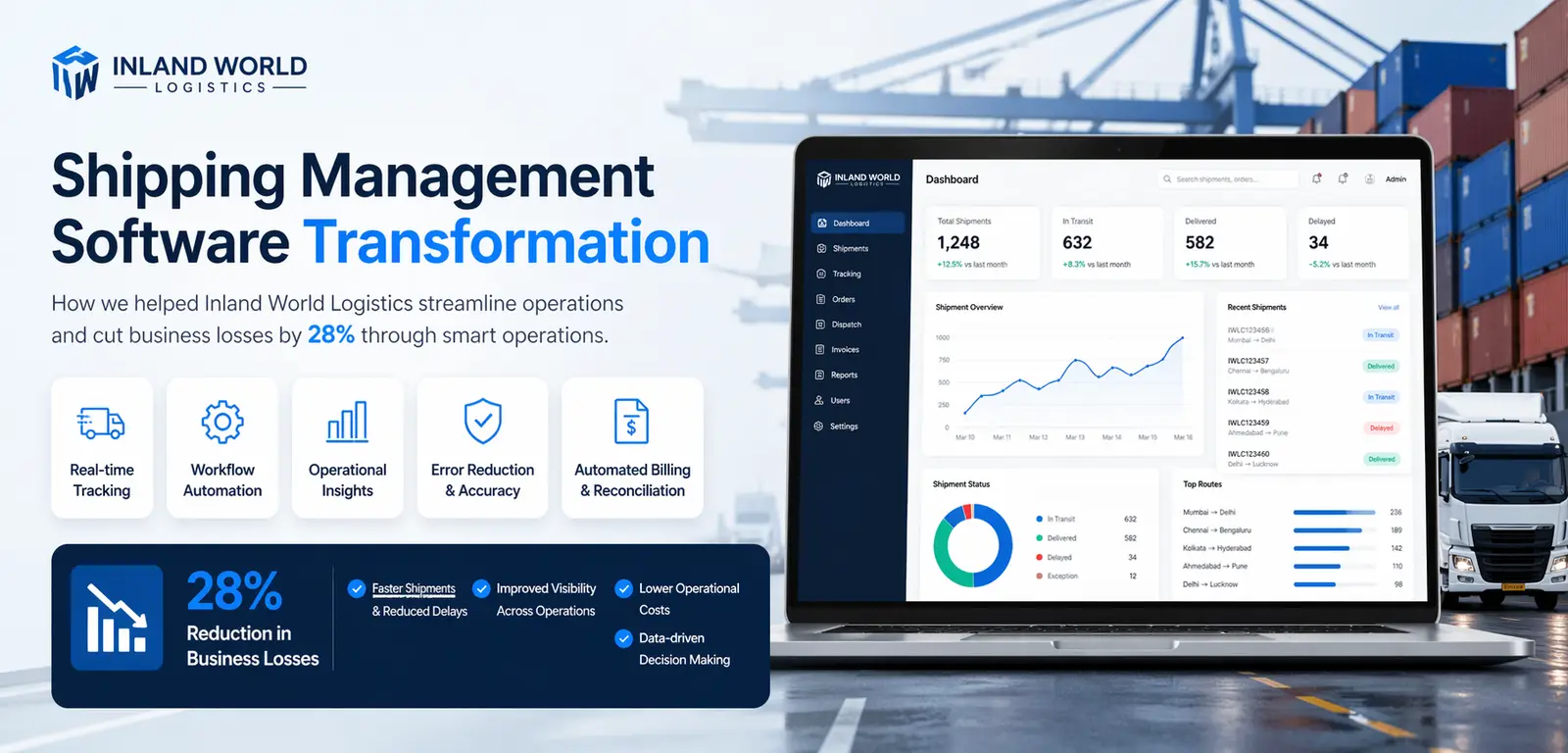
Centralized Operations Dashboard A single interface to manage all shipments, statuses, and workflows in real time.
Workflow Automation Automated order processing, dispatch updates, and internal notifications to reduce manual effort.
Real-Time Tracking System Live tracking of shipments with accurate status updates across all stages.
Error Prevention Mechanisms Built-in validations and standardized processes to minimize human errors.
Data & Analytics Layer Custom dashboards and reports to identify inefficiencies and improve decision-making.
The Solution
We delivered a fully customized Shipping Management Software tailored to Inland World Logistics' operational needs:
- End-to-end shipment lifecycle management
- Real-time tracking with automated alerts
- Integrated billing and reconciliation system
- Role-based access for different operational teams
- Scalable architecture to support business growth
The system seamlessly integrated into their existing workflow while eliminating redundancies.
Results
The transformation led to measurable business impact:
- 28% reduction in overall business losses
- Faster and more efficient shipment processing
- Significant reduction in manual errors
- Improved coordination across departments
- Enhanced financial tracking and transparency
Conclusion
By combining automation, real-time visibility, and intelligent system design, Inland World Logistics was able to transition from reactive operations to a proactive, data-driven model.
This project was not just about building software — it was about transforming how logistics operations are managed at scale.